Translate:

Apollo 1 in Photographs: The Apollo Photo Archive
Book Description
The Apollo Photo Archive series offers the most complete pictorial record of the Apollo 1 tragedy and the entire Apollo program. This comprehensive series features each mission, from Apollo 1 through Apollo 17, in a single volume, showcasing more than 500 photos and captions for each mission.
Every mission is documented, detailing the construction of the spacecraft, the assembly of the crew, and the training, rollout, preflight festivities, countdown, launch, flight, splashdown, and the subsequent postflight media appearances and activities.
Tragically, the first manned mission planned for the Apollo program also marked a significant loss: no US astronaut had previously died aboard a spacecraft. The Apollo 1 command module caught fire on the launchpad, resulting in the loss of all three astronauts on board.

Apollo 7 in Photographs: The Apollo Photo Archive
Book Description
More than 700 stunning images capture the pivotal history of the Apollo 7 mission, marking America's triumphant return to manned spaceflight.
The Apollo Photo Archive series represents the most comprehensive pictorial record of America’s moon-landing program ever published.
This series continues with the significant launch of Apollo 7 in October 1968. Crewed by Wally Schirra, Donn Eisele, and Walt Cunningham, it was the first successful Apollo space flight following the tragic Apollo 1 disaster in January 1967. The success of Apollo 7 not only redirected the course of the Apollo program but also shaped the future of space exploration.
Readers will enjoy more than 700 remarkable photos that showcase the arrival and assembly of the rocket and spacecraft, crew selection and training, preflight activities, mission countdown, launch, the flight itself, splashdown, and subsequent crew appearances along with related activities.
Apollo 8 in Photographs: The Apollo Photo Archive
Apollo 8 in Photographs: The Apollo Photo Archive
An unprecedented photographic study of the Apollo 8 mission, which marked the first manned spaceflight to escape Earth's gravity and orbit the moon, has been compiled in the Apollo Photo Archive series. This series stands as the most comprehensive pictorial record of America’s moon-landing program ever published.
Continuing with the Apollo 8 launch in December 1968, astronauts Frank Borman, Jim Lovell, and Bill Anders achieved several historic firsts during this remarkable flight. Apollo 8 not only became the first manned flight to escape Earth’s gravity, but it was also the first mission to orbit another celestial body, specifically the moon. Launched by the powerful Saturn V rocket, the crew of Apollo 8 reached an astounding speed of 24,593 mph, establishing both manned speed and distance-from-Earth records.
The Apollo Photo Archive showcases a wide array of images, including spacecraft and rocket assembly, crew selection and training, preflight activities, mission countdown, the launch event, the flight itself, splashdown, and subsequent crew appearances. This particular volume features over 800 stunning images.
Apollo 9 in Photographs: The Apollo Photo Archive
Apollo 9 in Photographs: The Apollo Photo Archive
Apollo 9 proved the viability of several technologies necessary to land on the moon, including the lunar module itself. This volume includes more than 800 images of the mission.
The Apollo Photo Archive series comprises the most comprehensive pictorial record of America’s moon-landing program ever published.
This fourth volume covers Apollo 9, a risky but critical step in the space race with the Soviet Union. Commander Jim McDivitt and command module pilot Dave Scott, both Gemini veterans and Air Force pilots, were joined by civilian rookie Rusty Schweickart as lunar module pilot. While orbiting Earth for 10 days, they achieved the first rendezvous and docking with the lunar module. Schweickart took the first Apollo spacewalk, proving the viability of the spacesuit and backpack for the lunar surface.
The 12-volume Apollo Photo Archive features images of spacecraft and rocket assembly; crew background and training; the countdown, launch, mission, and splashdown; and subsequent crew appearances and activities. This volume, Apollo 9 in Photos, includes more than 800 images, of which many pre- and postflight photos have never been published.
Apollo 10 in Photographs: The Apollo Photo Archive
Apollo 10 in Photographs: The Apollo Photo Archive
The Apollo Photo Archive series comprises the most comprehensive pictorial record of America’s moon-landing program ever published.
This fifth volume covers Apollo 10, which occurred in May 1969. The crew of Apollo 10, Tom Stafford, Gene Cernan, and John Young, all were veterans of prior spaceflights. On this mission, they repeated many of the same tests involving the lunar module that were carried out by the crew of Apollo 9, but this time while orbiting the moon. Apollo 10 proved that the hardware worked within the lunar gravitational field.
The 12-volume Apollo Photo Archive features images of spacecraft and rocket assembly; crew background and training; the countdown, launch, mission, and splashdown; and subsequent crew appearances and activities. This volume, Apollo 10 in Photos, includes more than 800 images, of which many pre- and postflight photos have never been published.
Photographing America's First Astronauts
Book Description
Featuring more than 600 photos, "Photographing America's First Astronauts: Project Mercury Through the Lens of Bill Taub" stands as the most complete photographic account of Project Mercury ever published. Unlike previous Project Mercury books that mostly relied on a limited selection of photos released by NASA, this book showcases hundreds of never-before-seen images of America’s first manned space program, captured by NASA’s inaugural staff photographer, Bill Taub. Taub accompanied the Mercury astronauts everywhere, documenting their daily activities from 1959 to 1963. Consequently, his photographs offer a unique and intimate behind-the-scenes glimpse at the personnel and operations of Project Mercury in real time.
Drawing from Taub’s recently unearthed archive of thousands of black-and-white and color prints, slides, and transparencies, this publication represents the first comprehensive visual documentation of Project Mercury. No other book has dedicated as many images to each of the Mercury Seven astronauts and their groundbreaking spaceflights. Additional chapters delve into astronaut selection and training, NASA management, and the facilities at Cape Canaveral, Florida. Each image is paired with a detailed caption, and the foreword is penned by the legendary NASA Flight Director Eugene Kranz.

Picturing The Space Shuttle
Book Description
Rare views of the beginnings of a historic space program are captured in this remarkable collection. After the excitement of the first Moon landing, the U.S. space program took an ambitious new direction closer to home: NASA’s Space Shuttle program promised frequent access to Earth orbit for medical and scientific breakthroughs; deploying, repairing, and maintaining satellites; and assembling a space station. 'Picturing the Space Shuttle' is the first photographic history of the program’s early years as the world's first space plane debuted.
Showcasing over 450 unpublished and lesser-known images, this book traces the growth of the Space Shuttle from 1965 to 1982, from initial concept through its first four space flights. The photographs offer windows into designing the first reusable space vehicle as well as the construction and testing of the prototype shuttle Enterprise. They also show the factory assembly and delivery of the Space Shuttle Columbia, preparations at the major NASA field centers, and astronaut selection and training. Finally, the book devotes a chapter to each of the first four orbital missions, STS-1 through STS-4, providing an abundance of seldom seen photos for each flight.
Mostly selected from J. L. Pickering’s personal archive, the world’s largest private collection of U.S. human space flight images, the high-quality photographs in this book are paired with veteran journalist John Bisney’s detailed descriptions and historical background information. The book also includes images of NASA and Shuttle contractor booklets, manuals, access badges, and press kits, as well as a foreword by Robert Crippen, the pilot of the first Space Shuttle flight. 'Picturing the Space Shuttle' recreates the excitement of an era in which the possibilities of space exploration seemed limitless.
Reviews
“The best history of the early Space Shuttle I’ve ever read, illustrated with scores of pictures I’d never seen. I lived and worked the Space Shuttle program but this book brought new insights even for me.”―Hugh W. Harris, retired director of public affairs, NASA, Kennedy Space Center
“Pickering is one of the world’s leading experts on human spaceflight photography, and his works are the benchmarks against which all other photo-driven, NASA-related projects must be measured.”―Rick Houston, coauthor of Go, Flight! The Unsung Heroes of Mission Control, 1965–1992
“Once again Bisney and Pickering have put together a collection of photos with insightful text that brings to life a part of our space program history. With a focused attention on the early days and first four missions of the Space Shuttle program, this book recalls the origins of an ambitious new era that filled us with hope for a bright post-Apollo future of living and working in space.”―Jim Banke, former aerospace journalist and president of MILA Solutions, LLC
“A wonderful collection of rare photos that make you relive the exciting early years of the Space Shuttle program.”―Ed Hengeveld, spaceflight historian

Picturing Apollo 11 Rare Views and Undiscovered Moments
Book Description
Picturing Apollo 11 is an unprecedented photographic history of the space mission that defined an era. Through a wealth of unpublicized and recently discovered images, this book presents new and rarely-seen views of the people, places, and events involved in the pioneering first moon landing of July 20, 1969.
No other book has showcased as many never-before-seen photos connected with Apollo 11, or as many photos covering the activities from months before to years after the mission. Starting with the extensive preparations, these images show astronauts Neil Armstrong, Michael Collins, and Buzz Aldrin training for the flight, as well as the stages of the massive Saturn V rocket arriving at the Kennedy Space Center for assembly. They capture the media frenzy over the unfolding story and the "moon fever" that gripped the nation.
Also featured here are shots of incredible moments from the mission. In these images, spectators flock to Cape Canaveral to watch the mighty Saturn V launch in a cloud of fire and thunder. Armstrong and Aldrin step out of the lunar module Eagle onto the surface of the moon. The command module Columbia splashes down in the Pacific Ocean, and the extraordinary voyage is celebrated around the world, and in the following decades.
Most of the photographs were selected from NASA archives and the collection of J. L. Pickering, which is the world's largest private collection of U.S. human space flight images. The accompanying text by veteran space correspondent John Bisney details the scenes, revealing the astonishing scale and scope of activities that went into planning and executing the first moon landing. This book commemorates the historic mission and evokes the electric atmosphere of the time.
Reviews
"A visual feast. We're right alongside Neil Armstrong, Mike Collins and Buzz Aldrin through the months of training, the incredible journey to the moon, and the hero's welcome that greeted their return. Pickering and Bisney have produced a precious chronicle of a time that will never come again." -- Andrew Chaiken, author of A Man on the Moon: The Voyages of the Apollo Astronauts
"Focused almost exclusively on the three astronauts of Apollo 11, this profusely illustrated book recounts the adventure of the first Moon landing."―Roger D. Launius, former associate director of collections and curatorial affairs, National Air and Space Museum
"Apollo 11 was humanity's greatest achievement. Pickering and Bisney have collected some of the best images of little-known events from the lead-up to humankind's first steps on another world."―Jason Rhian, senior editor, SpaceFlight Insider

The Space-Age Presidency of John F. Kennedy
Book Description
This engaging and unprecedented work captures the compelling story of President Kennedy's critical role in shaping the United States space program, especially during the tense period of the Cold War with the Soviet Union. The stunning collection of photographs, documents, and artifacts vividly illustrates Kennedy's close association with the race to space throughout his storied time in office.
In addition to the exhaustive research and rare photographs, many of which are unpublished, the authors have included excerpts from Kennedy's speeches, news conferences, and once-secret White House recordings. These elements provide the reader with more context through the president's own words. While Kennedy did not live to see the fruition of many of the endeavors he supported, his enduring legacy continues to inspire many aspects of the space program—many of which are captured in this significant work.
Forward by Dr. Christopher C. Kraft Jr.
Reviews
"The Space-Age Presidency of John F. Kennedy gives readers an in-depth look at President Kennedy's involvement in the beginning stages of the gargantuan effort to reach the Moon--before the Russians. The combination of rare photographs and insight Bisney and Pickering lend to the story gives a unique context to the politics and events of the era."--Roland Miller, author of Abandoned in Place: Preserving America's Space History
"...plenty of new images about familiar events, from Kennedy's 1962 speech at Rice University--part of a trip that also included stops in Huntsville, Cape Canaveral, and the McDonnell plant in St. Louis--as well as lesser-known events, like a trip to New Mexico and Nevada in 1962 to review efforts to develop nuclear engines for space applications." -- Jeff Foust, The Space Review
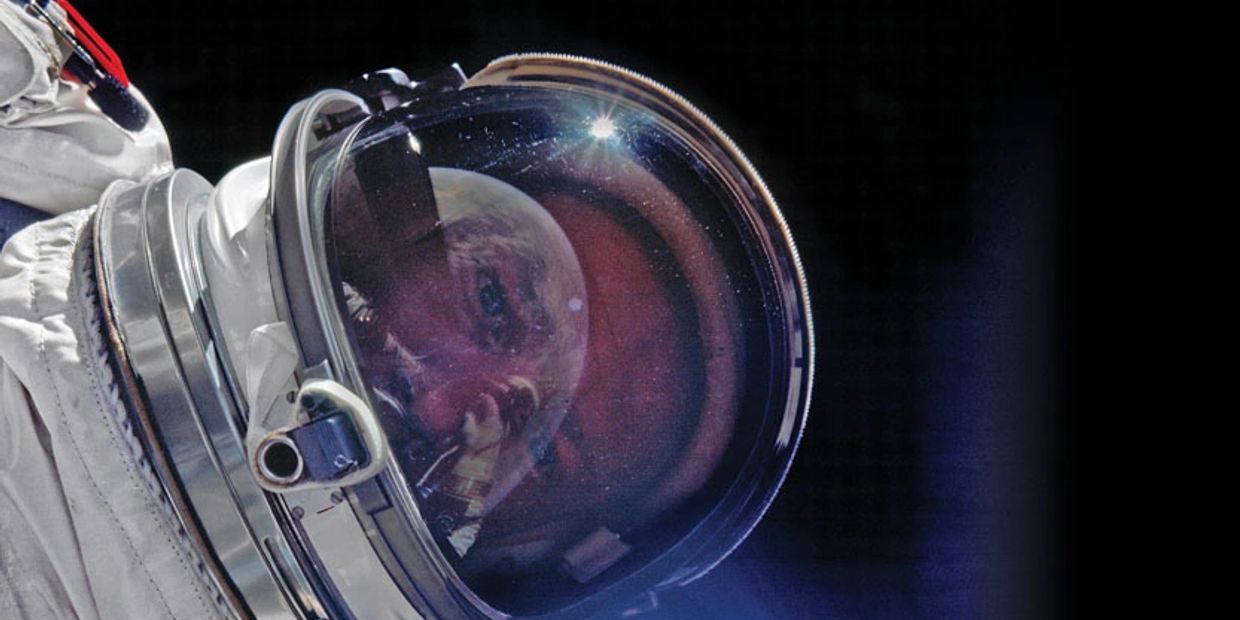
Spaceshots and Snapshots of Projects Mercury & Gemini
Book Description
This is the story of the people and events involved in Projects Mercury and Gemini, illustrated through hundreds of unpublished and rare color and black-and-white photographs. Unlike other publications that have depicted the Space Race with familiar and easily accessible images, this history relies on the authors' extensive private library of over 125,000 high-resolution photos documenting the first two U.S. manned space programs from 1961 to 1966.
Collected throughout a lifetime from both public and private sources—including NASA archives, fellow photo collectors, retired NASA and news photographers, and auction houses—these images offer a more comprehensive view of American space missions during the Cold War era than ever before. For the first time, each flight is devoted a chapter, and the authors include richly-detailed captions that provide new insights into one of America's greatest triumphs.
Foreword by Lt. Gen. Thomas P. Stafford, USAF (Ret.)
Reviews
“[Bisney and Pickering] have collected an impressive selection of photographs. The book’s massive assortment . . . does a wonderful job of illustrating the culture and experience of the space race.”—mentalfloss.com
“Together, [Spaceshots and Snapshots of Projects Mercury and Gemini and Moonshots and Snapshots of Project Apollo] are a treat for any space buff and, for the true believers, a reminder that even greater journeys may lie just ahead.”—American Scientist
“An enjoyable book, offering a different look at familiar missions.”—The Space Review
“In resurrecting many obscure photos the authors have provided a valuable, and highly desirable, compendium of outstanding pictures from an age when each flight saw the release of perhaps fewer than one-hundred stock shots.”—Spaceflight
“The visual narrative employed by the authors reminds us not only of the sublimity of astronaut photography, but also the thousands of people who made spaceflight possible.”—Quest
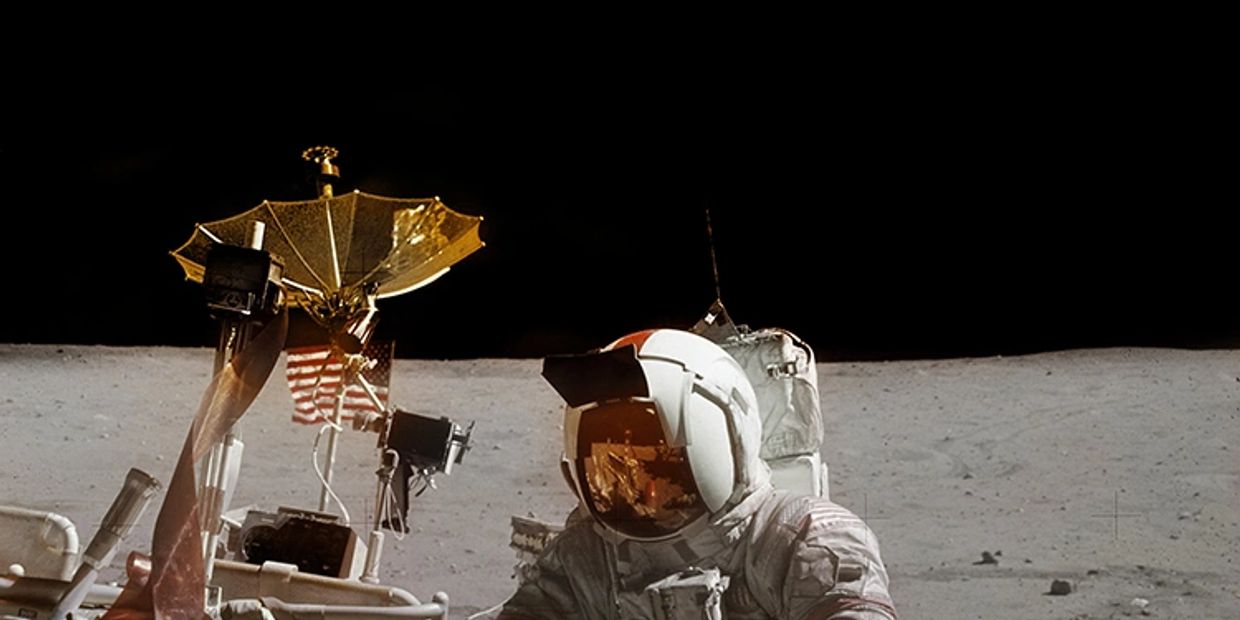
Moonshots & Snapshots of Project Apollo
Book Description
In this companion volume to their extraordinary book of rare photographs from the Mercury and Gemini missions, John Bisney and J. L. Pickering present a captivating photographic history of Project Apollo, capturing the essence of the Golden Age of US manned space flight.
Beginning in 1967, "Moonshots and Snapshots of Project Apollo" chronicles the program's twelve missions, along with its two follow-ons, Skylab and the Apollo-Soyuz Test Project. The authors again draw from rarely seen images sourced from NASA, industry archives, and news media, taking readers on a journey to the Moon, through months-long odysseys above Earth, and ultimately to the first international manned space flight in 1975.
This book pairs numerous previously unpublished images from Pickering's unmatched collection of Cold War-era space photographs with extended captions, identifying many NASA, military, and contract workers for the first time. This comprehensive background information enhances the exciting climax and conclusion of the Space Race.
Reviews
“These ‘Moonshots and Snapshots’ provide a new perspective on NASA’s Project Apollo. . . . Bisney and Pickering don’t just focus on the iconic images that we all recognize; instead, they opened their lens to the machinery behind the missions (computers and other hardware), the astronauts’ pranks, and the rank-and-file NASA workers who made it all happen.”―Modern Notion Daily
“Together, [Spaceshots and Snapshots of Projects Mercury and Gemini and Moonshots and Snapshots of Project Apollo] are a treat for any space buff and, for the true believers, a reminder that even greater journeys may lie just ahead.”―American Scientist
“J. L. Pickering and John Bisney have done it again! . . . Moonshots and Snapshots of Project Apollo comes with SpaceFlight Insider’s highest recommendation. It is an excellent follow-on to Spaceshots and Snapshots of Projects Mercury and Gemini: A Rare Photographic History as well as an exceptional addition to any space enthusiast’s library.”―SpaceFlight Insider
“Pairs many previously unpublished images from Pickering’s collection with captions that identify many NASA, military, and contract workers.”—Quest
“In resurrecting many obscure photos the authors have provided a valuable, and highly desirable, compendium of outstanding pictures from an age when each flight saw the release of perhaps fewer than one-hundred stock shots.”—Spaceflight
“John Bisney and J. L. Pickering have assembled a wonderful collection of rarely seen photographs that true space buffs will enjoy. The captions are worth their weight in space-fact gold.”—Richard W. Orloff, coauthor of Apollo: The Definitive Sourcebook
“If you think you’ve seen every cool photo from the pioneering days of NASA, think again! J. L. Pickering and John Bisney have combed the archives of photojournalists who covered the Mercury, Gemini, Apollo, and Skylab missions to create an extraordinary visual record that will delight and surprise even the most hard-core space enthusiast.”—Andrew Chaikin, author of A Man on the Moon: The Voyages of the Apollo Astronauts